
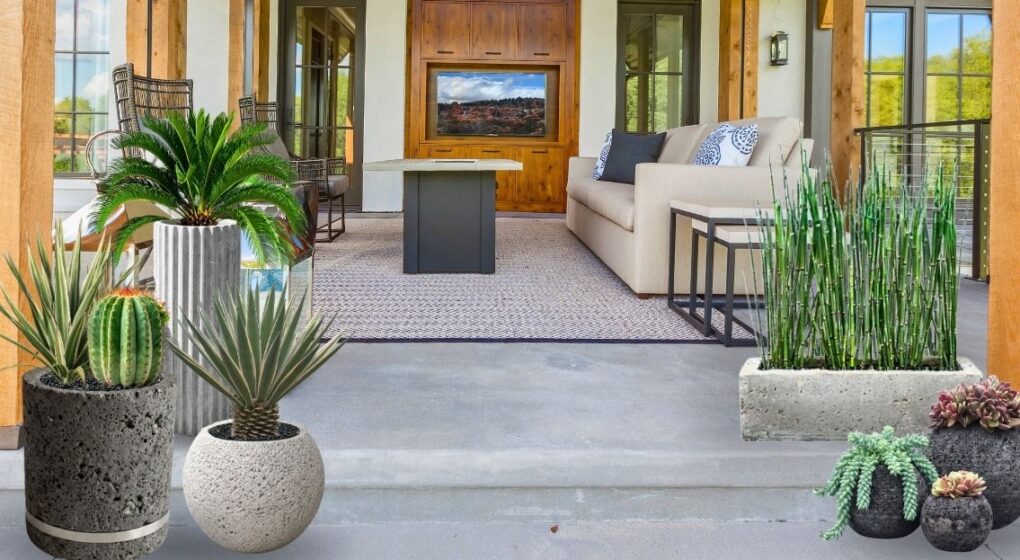
Hypertufa is often known for a weathered, rustic look, but you can achieve a sleek modern aesthetic by embracing clean lines, geometric simplicity, and clever textural variations.
1. Spherical Globes
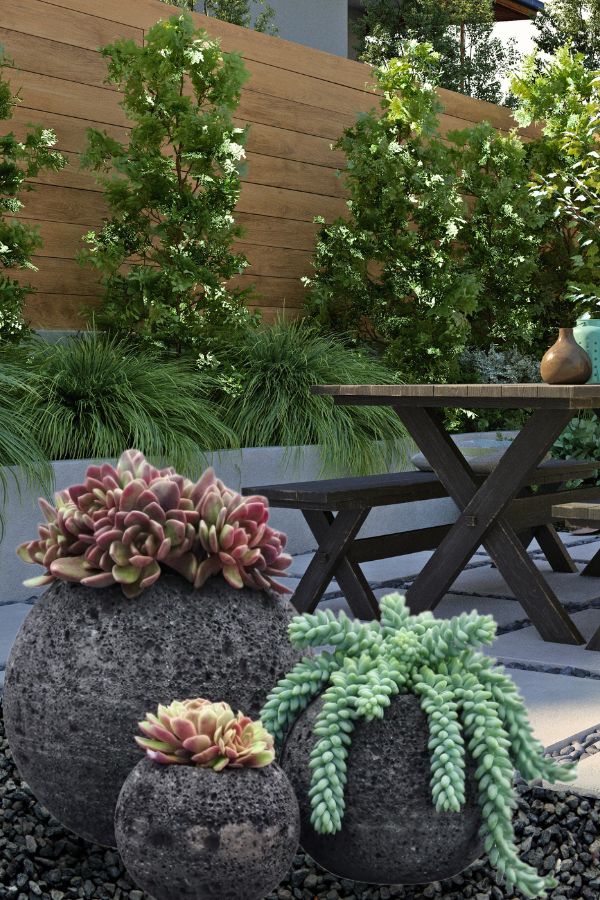
For spherical globes use cheap plastic playballs or large glass light fixture globes as molds, cutting them away after the mix cures.
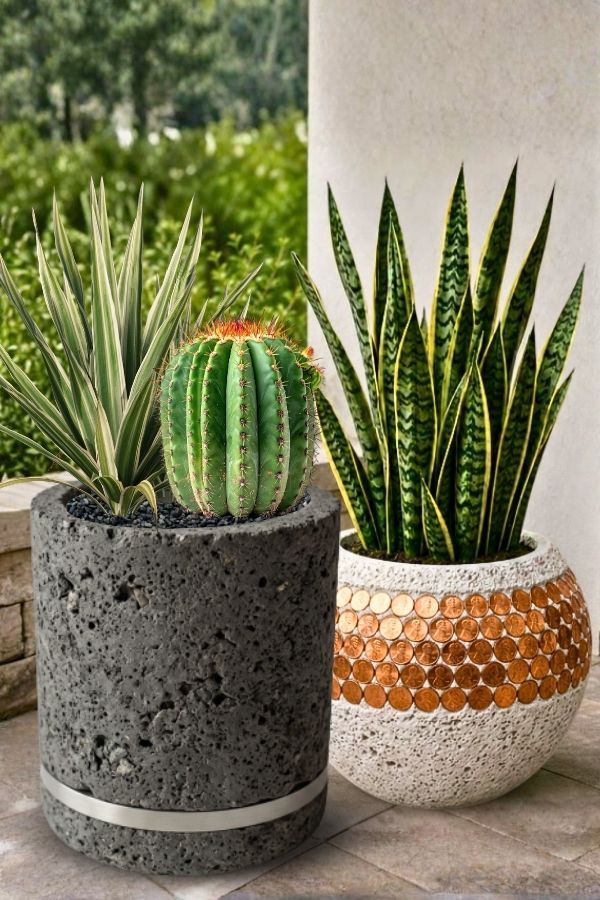
Integrate dark pigments: Mix in black or charcoal liquid cement color to turn the standard gray into a sleek, slate-like charcoal finish. For a volcanic rock/pumice appearance, burnish the outer surface with a steel wire brush after the initial first day of curing.
2. Tall Fluted Cylindars
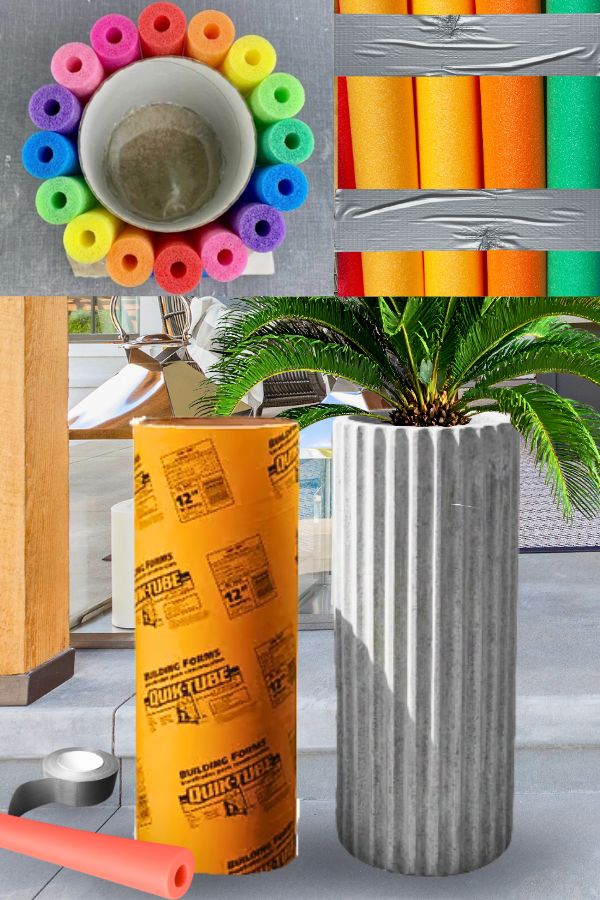
To create tall cylinder planters, I use the cylindrical cement building forms from the home center or a large diameter PVC pipe if you have any of those laying around.
For the fluted effect, cut pool noodles to the same height as the inner mold you are using and form a ring of pool noodles held together with duct tape in an outer ring leaving about an inch and a half in between the inner mold form and the noodles. Use more of a wet “pouring” mix for this project so ensure the entire cavity is filled nicely.
3. Monolithic Troughs
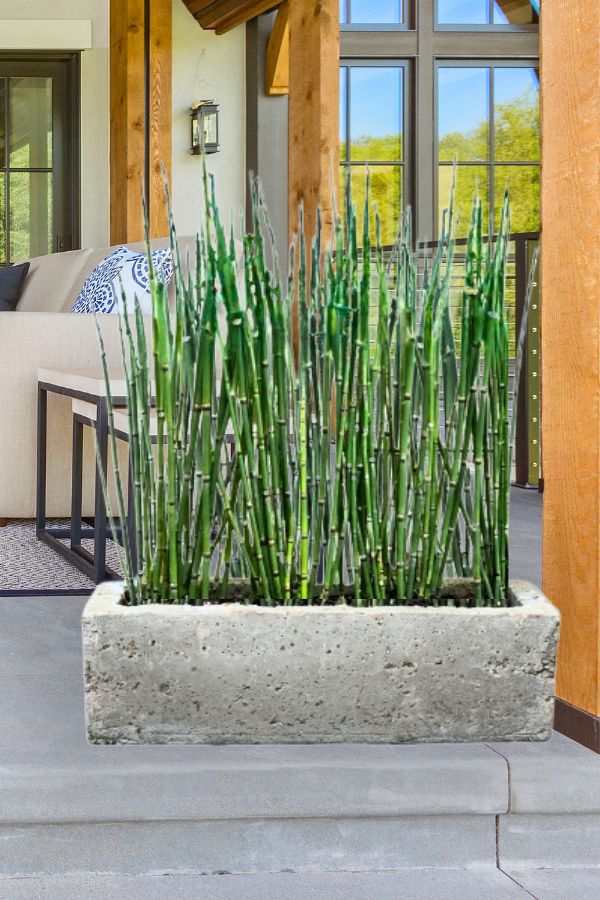
Move away from the organic old stone troughs and use sharp-edged modern molds like sleek square wooden boxes and rigid foam insulation panels cut to size. I like using rigid foam insulation because it’s both easy to cut to almost any size and tape the panels together with duct tape.
4. Two-Toned Planters
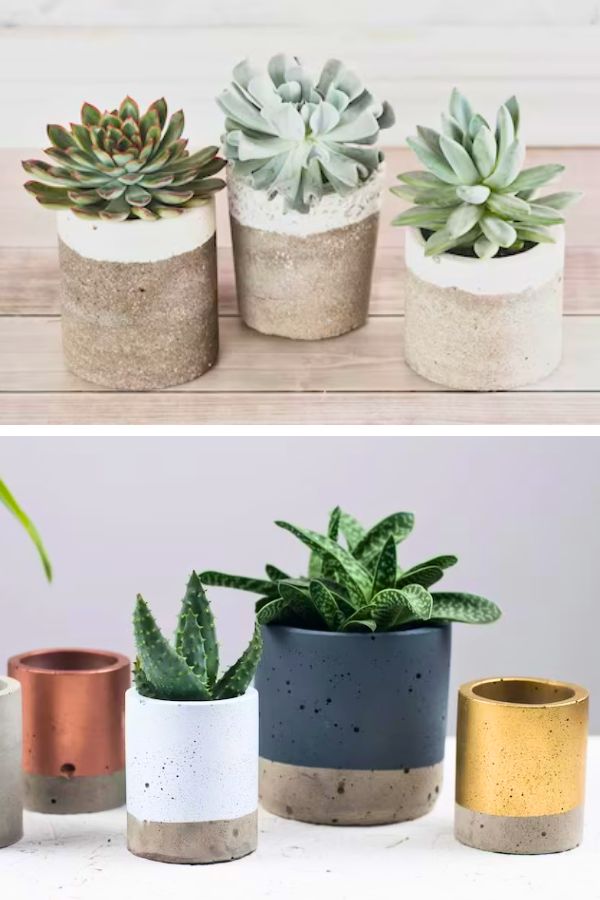
Pour a smooth layer of standard, dense concrete or mortar mix at the bottom of the mold for a polished rim or base, then fill the upper walls with a lightweight, porous hypertufa mixture. The contrast between raw, smooth concrete and the earthy, sponge-like hypertufa provides a striking contemporary look.
An easier way is to make one casting and after curing paint the upper or lower planter a bold modern color or one of my favorites is using metallic paint for a two-toned look.
5. Low Modern Bowls
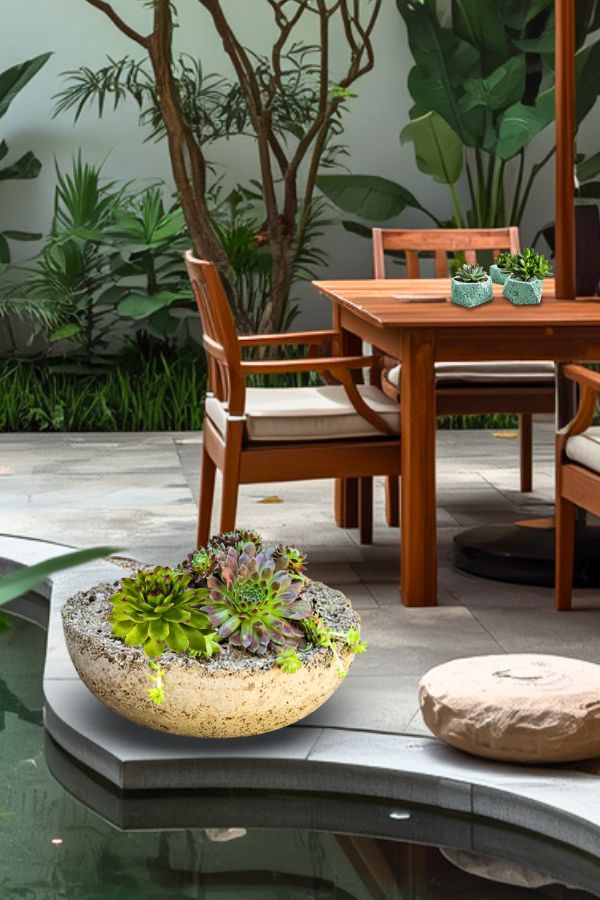
You can buy ready-made silicone casting molds online that are specifically designed for making planter bowls. They are flexible, which makes peeling them off the hardened pot effortless. Large plastic mixing bowls are another option.
6. Bubble Wrap Planter
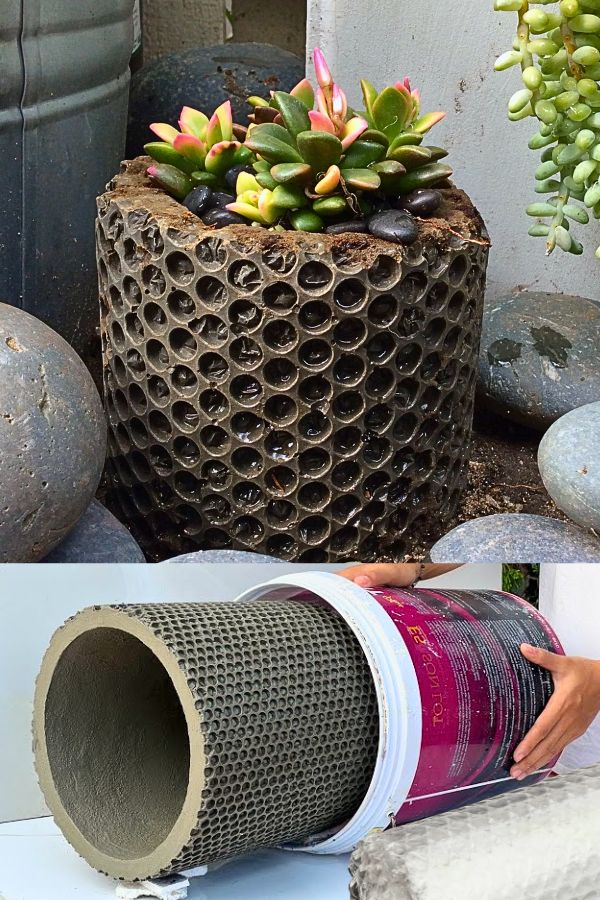
For this one, you will need a two-part mold. You will use an outer mold to shape the outside (like a painter’s bucket), an inner mold to create the inside planting space (I reuse a large black pot from the garden center), and bubble wrap placed on the inside of the outer mold to give it the unique “bubble” texture.
7. Geometric Mold Patio Table Planters
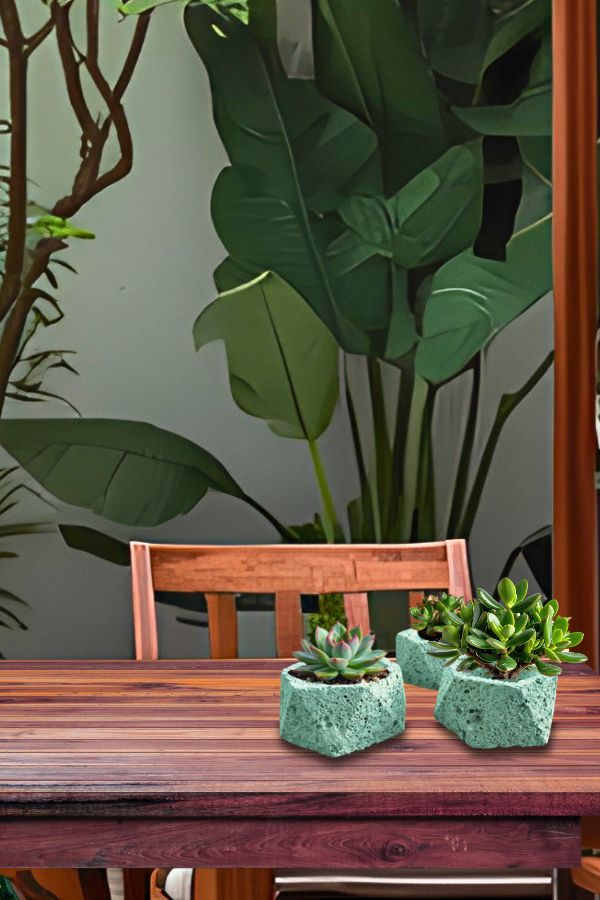
Use interesting geometric shaped cement and concrete D.I.Y. planter molds and brightly colored or dark colored cement pigments. Coloring pigments for cement and the smaller cement planter molds are inexpensive and easy to find online.
Decorative Ideas
Incorporate metal accents: Use cement adhesive to attach rows of shiny copper pennies or wrap the finished piece in a clean band of stainless steel.
Color Washes & Stains: Instead of leaving the hypertufa gray, apply a light coat of white lime wash, watered-down charcoal paint, or a subtle concrete stain to neutralize the color and create a sleek, uniform finish that complements modern home exteriors.
Crisp Edges: Once the hypertufa has partially cured (around 24 hours), remove it from the mold and use a rasp tool or wire brush to sand down and sharpen the corners. This transforms a “muddy” cast into a sharp, architectural form.
Monochromatic Succulent Arrangements: Fill your clean-lined hypertufa planters exclusively with structural, monochromatic succulents (e.g., silver-gray Echeveria or tight, dark Sempervivum) to mimic the look of high-end, contemporary landscape installations.