
Growing large tropical plants can be a great investment for any garden or patio. In addition to providing a lush and tropical look, they grow fast, giving you more bang for your buck. Let’s dive right into my top 20 favorites.
Croton
Crotons are vibrant tropical plants known for their multicolored foliage. The leaves can be in shades of green, yellow, red, and even purple. The plant doesn’t flower often, but when it does, the flowers are small and inconspicuous.
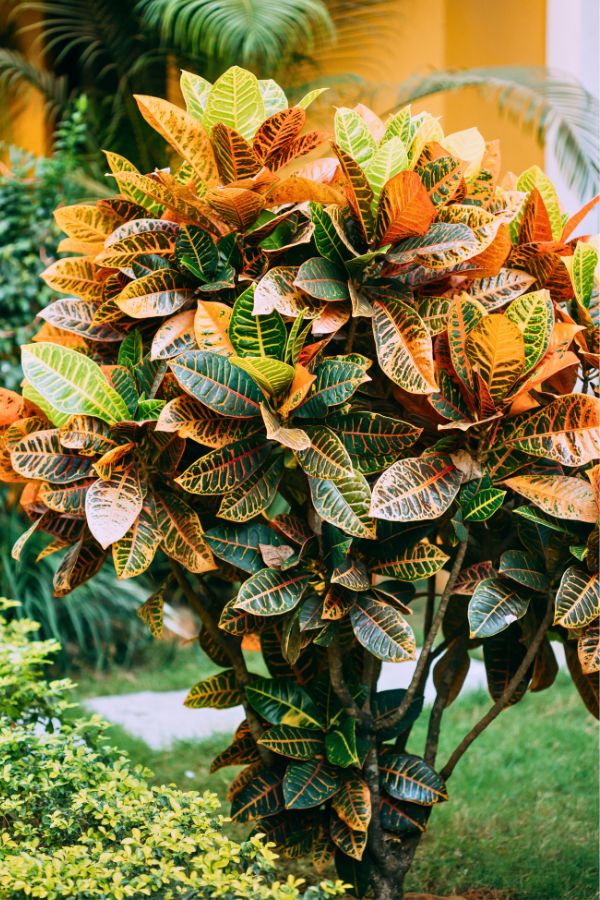
Large croton plant grown as a small tree
Crotons are sun-loving plants, but they can also tolerate shade. However, more sunlight exposure often results in more vibrant leaf colors. Three popular varieties of Crotons are:
- Croton ‘Petra’: Known for its bright orange, red, and yellow leaves.
- Croton ‘Gold Dust’: Recognizable by its green leaves speckled with bright yellow.
- Croton ‘Mammy’: This variety has twisted leaves in shades of red, yellow, and green.
- Botanical name: Codiaeum variegatum
- Cold hardiness: USDA zones 9b to 11
Tasmanian Tree Fern
Tree ferns are majestic plants known for their feathery, arching fronds and a trunk-like stem. They don’t produce flowers, but their lush green foliage more than makes up for it.
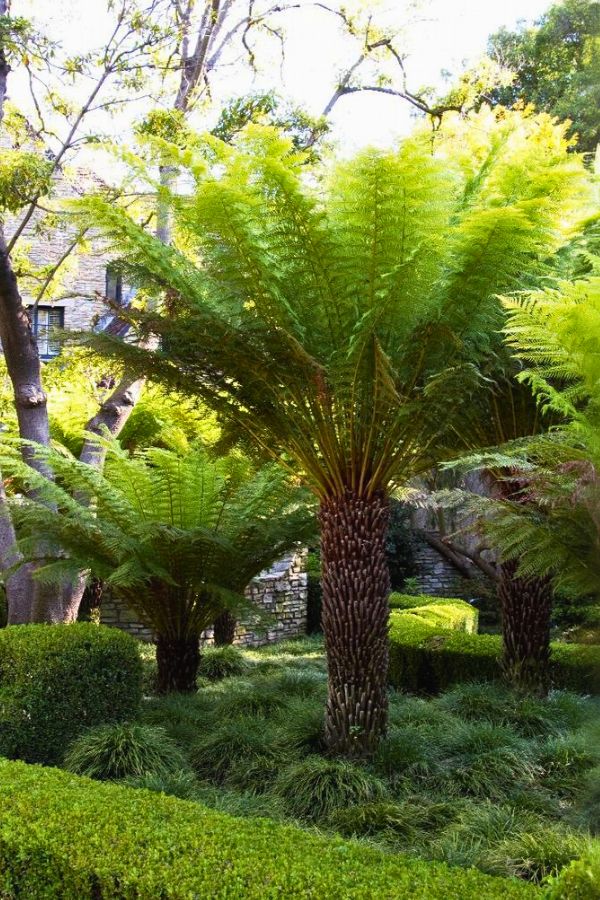
Tasmanian Tree Fern
Tree ferns are shade-loving plants, perfect for adding a tropical touch to shaded areas in the garden. Three popular varieties of Tree Ferns are:
- Dicksonia antarctica: Known for its dark green, lush fronds.
- Cyathea cooperi: Recognizable by its large, feathery fronds.
- Alsophila dregei: This variety has delicate, finely divided fronds.
- Botanical name: Dicksonia antarctica
- Other common names: Fern tree, Soft tree fern, Man fern
- Cold hardiness: USDA zones 9 to 11
- Tree Ferns are not toxic to dogs or cats.
Plumeria
Plumeria, also known as Frangipani, is a tropical plant known for its highly fragrant, vibrant flowers that bloom in various colors like white, yellow, pink, and red. The plant has thick stems and leathery, oblong leaves.
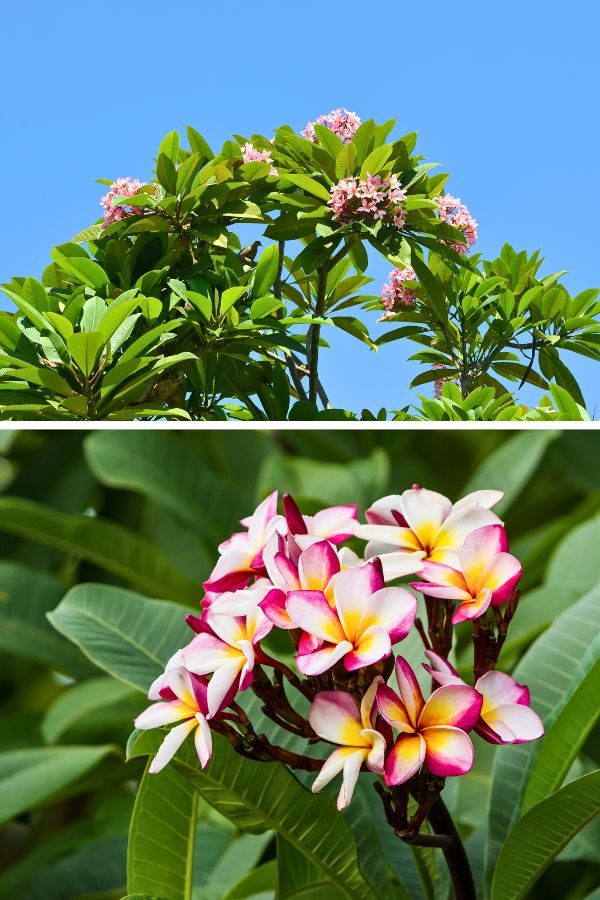
Plumeria, the Hawaiian lei flower
Plumeria loves the sun and requires at least six hours of direct sunlight each day. Three popular varieties of Plumeria are:
- Plumeria ‘Celadine’: Known for its yellow flowers.
- Plumeria ‘Kauka Wilder’: Recognizable by its pink and yellow flowers.
- Plumeria ‘Samoan Fluff’: This variety has large, white, and fluffy flowers.
- Botanical name: Plumeria
- Other common names: Frangipani, Lei flower
- Cold hardiness: USDA zones 9 to 11
Cannas
Cannas are tropical plants known for their large, paddle-shaped leaves and showy flowers that come in shades of red, orange, and yellow. The foliage can be green, yellow, bronze, or even variegated.
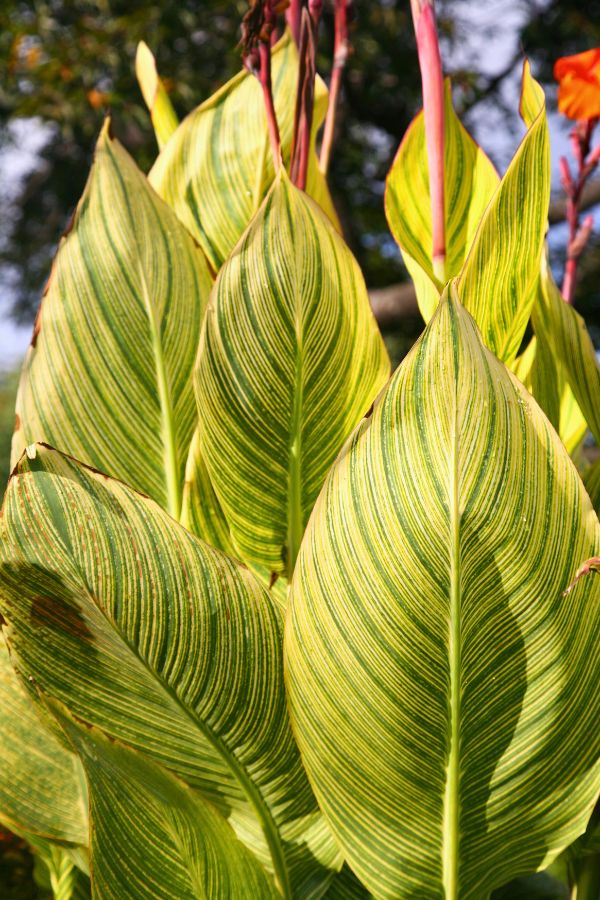
Canna lily
Cannas love the sun, but they can also tolerate partial shade. Three popular varieties of Cannas are:
- Canna ‘Tropicanna’: Known for its striped orange, pink, and green foliage and orange flowers.
- Canna ‘Pretoria’: Recognizable by its variegated green and yellow foliage and orange flowers.
- Canna ‘Black Knight’: This variety has dark, almost black foliage and deep red flowers.
- Botanical name: Canna
- Other common names: Canna lily, Indian shot
- Cold hardiness: USDA zones 7 to 10
- Cannas are not toxic to dogs or cats.
Persian Palm
The Persian Palm, also known as the Fishtail Palm, is a tropical plant known for its unique, fishtail-shaped leaves. The plant doesn’t flower often, but when it does, the flowers are small and cream-colored.

Persian palm
Persian Palms are sun-loving plants, but they can also tolerate shade. Reaches 7-8 feet in height at maturity.
- Botanical name: Calidora (Alocasia x ‘Calidora’)
- Cold hardiness: USDA zones 10 to 11
Stromanthe
Stromanthe is a tropical plant known for its striking variegated foliage. The leaves are typically green on top and pinkish-red underneath, with cream-colored variegation.
Stromanthe is a shade-loving plant, perfect for adding a pop of color to shaded areas in the garden. Three popular varieties of Stromanthe are:
- Stromanthe sanguinea ‘Triostar’: Known for its green, pink, and cream-colored leaves.
- Stromanthe sanguinea ‘Magicstar’: Recognizable by its green and white variegated leaves.
- Stromanthe amabilis: This variety has green leaves with a purple underside.
- Botanical name: Stromanthe
- Other common names: Triostar, Tricolor Stromanthe
- Cold hardiness: USDA zones 10 to 11
- Stromanthe is not toxic to dogs or cats.
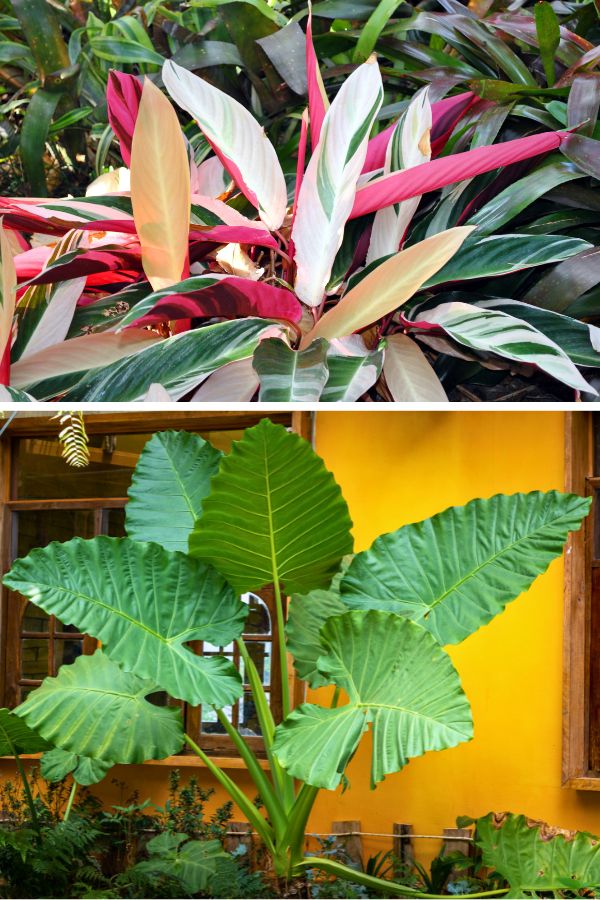
Stromanthe (top), Thailand Giant Elephant Ears (bottom)
Thailand Giant Elephant Ears
The Thailand Giant Elephant Ear is a truly impressive plant. Its gigantic, heart-shaped leaves can reach up to 5 feet in length, creating a dramatic tropical display. The leaves are a lush green, and the plant produces small, yellowish-white flowers.
This plant is a sun lover, but it can also tolerate partial shade.
- Botanical name: Colocasia gigantea ‘Thailand Giant’
- Other common names: Giant Elephant Ear
- Cold hardiness: Not frost tolerant, best kept above 60°F (15°C)
Imperial Bromeliads
Alcantarea Imperialis, also known as the Imperial Bromeliad, is a tropical plant known for its large, glossy, strap-like leaves that form a rosette. The plant produces a tall flower spike with numerous small, fragrant flowers that are typically red or white.
Alcantarea Imperialis loves the sun, but it can also tolerate partial shade. Three popular varieties of Alcantarea Imperialis are:
- Alcantarea imperialis ‘Rubra’: Known for its reddish leaves.
- Alcantarea imperialis ‘Silver Plum’: Recognizable by its silver-green leaves and deep purple underside.
- Alcantarea imperialis ‘Purpurea’: This variety has deep purple leaves.
- Botanical name: Alcantarea imperialis
- Other common names: Giant Bromeliad
- Cold hardiness: USDA zones 9 to 11
- Alcantarea Imperialis is not toxic to dogs or cats.
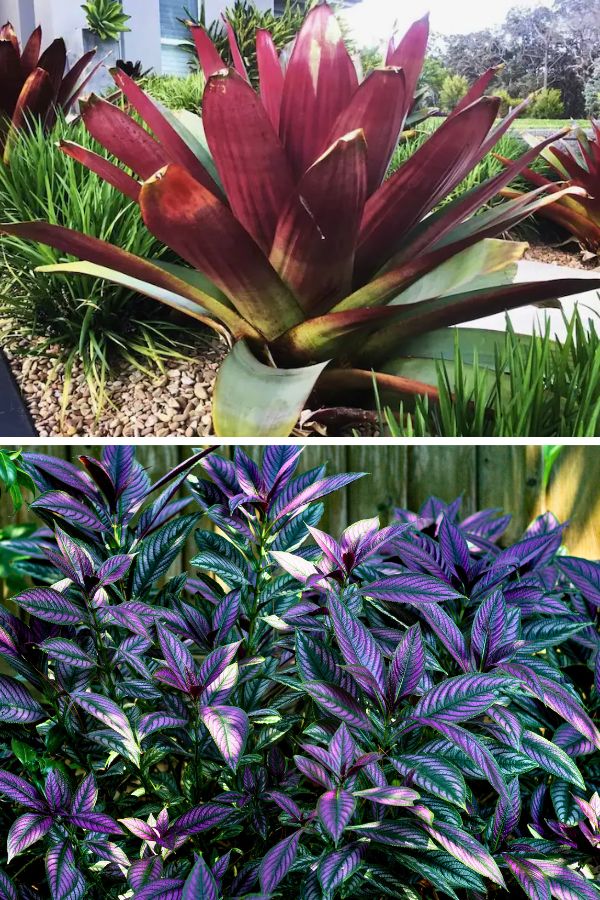
Imperial Bromeliad (top), Persian Shield (bottom)
Persian Shield
The Persian Shield is a stunning plant, known for its vibrant, iridescent purple leaves that have a metallic sheen. The plant produces small, tubular, violet flowers in the summer.
This plant can tolerate both sun and shade, but its color is most vibrant in a bit of shade. Three popular varieties include the ‘Persian Princess’ with its dark purple leaves and silver markings, the ‘Silver Shield’ with its silver leaves and purple markings, and the ‘Royal Purple’ with its solid purple leaves.
- Botanical name: Strobilanthes dyeriana
- Other common names: Royal Purple Plant, Bermuda Conehead
- Cold hardiness: Not frost tolerant, best kept above 60°F (15°C)
- Toxicity: Non-toxic to dogs and cats
Split Leaf Philodendron
Thaumatophyllum bipinnatifidum, formerly known as the Split Leaf Philodendron, is a tropical plant known for its large, glossy, deeply lobed leaves. The plant produces unusual, spiky flowers that are greenish-white in color.
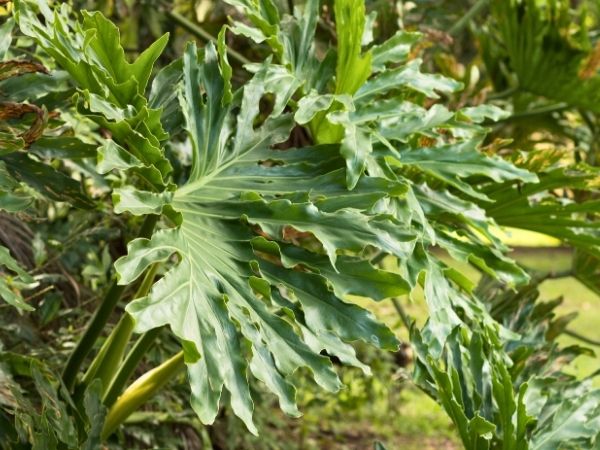
Split Leaf Philodendron (Thaumatophyllum bipinnatifidum)
Thaumatophyllum bipinnatifidum is a shade-loving plant, but it can tolerate some indirect sunlight. Three popular varieties of Thaumatophyllum bipinnatifidum are:
- Thaumatophyllum bipinnatifidum ‘Variegatum’: Known for its green and white variegated leaves.
- Thaumatophyllum bipinnatifidum ‘Xanadu’: This variety has more compact growth and smaller, more numerous leaves.
- Botanical name: Thaumatophyllum bipinnatifidum
- Other common names: Lacy tree philodendron, Selloum
- Cold hardiness: USDA zones 9 to 11
Heliconia
Heliconia, also known as Lobster-Claw, is a tropical plant known for its large, brightly colored bracts that come in shades of red, orange, yellow, and pink. The actual flowers are small and usually hidden inside the bracts.
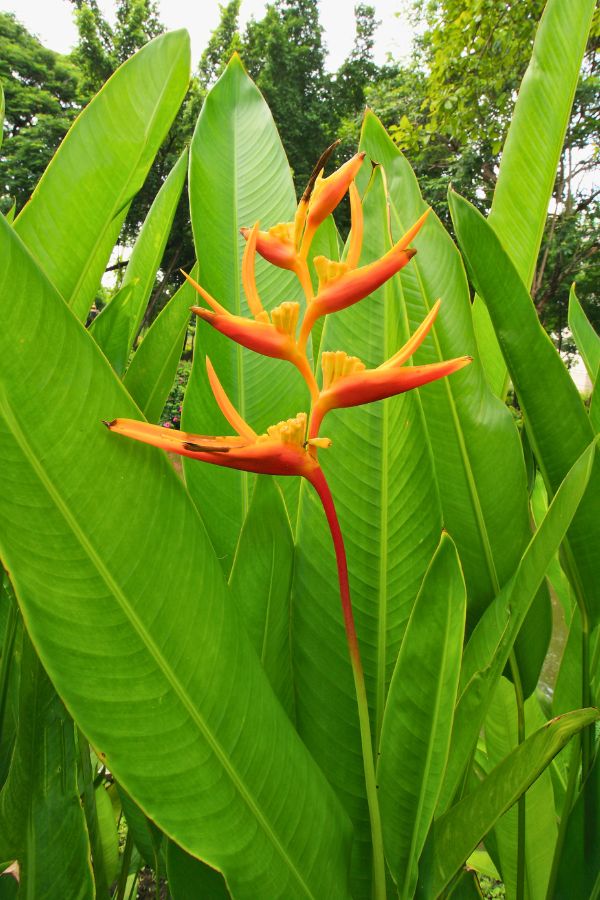
Heliconia
Heliconia loves the sun, but it can also tolerate partial shade. Three popular varieties of Heliconia are:
- Heliconia rostrata: Known for its hanging clusters of red and yellow bracts.
- Heliconia psittacorum: (pictured above) Recognizable by its upright, orange and yellow bracts.
- Heliconia bihai: This variety has large, red bracts.
- Botanical name: Heliconia
- Other common names: Lobster-Claw, Parrot’s Beak, False Bird-of-Paradise
- Cold hardiness: USDA zones 10 to 13
- Heliconia is not toxic to dogs or cats.
Giant Bird of Paradise
The Bird of Paradise, also known as Strelitzia, is a tropical plant known for its large, glossy, banana-like leaves and unique bird-like flowers. The flowers are typically orange and blue and bloom off and on throughout the year.
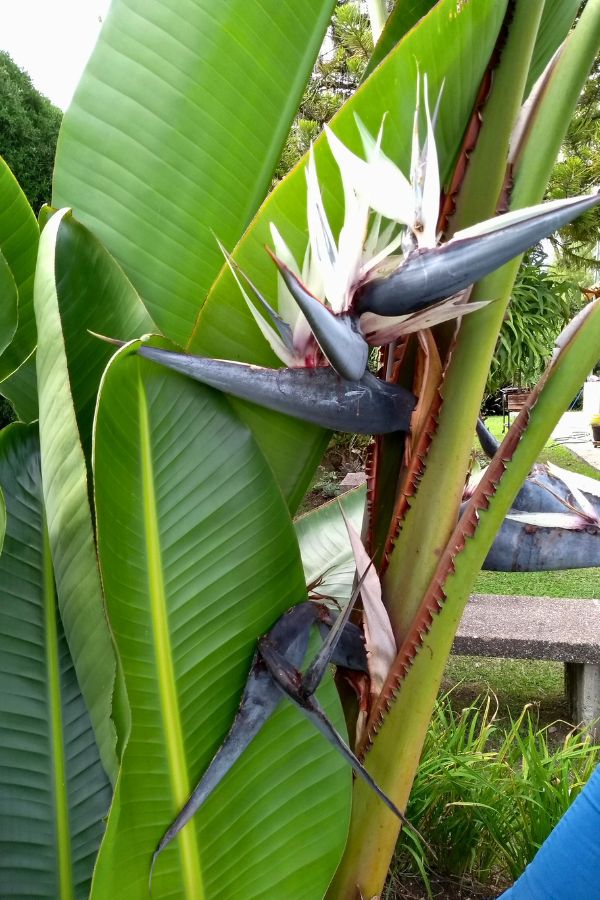
Giant Bird Of Paradise
Bird of Paradise loves the sun, but it can also tolerate partial shade. Three popular varieties of Bird of Paradise are:
- Strelitzia reginae: Known for its orange and blue flowers.
- Strelitzia nicolai: Recognizable by its white flowers.
- Strelitzia juncea: This variety has rush-like leaves and orange and blue flowers.
- Botanical name: Strelitzia
- Other common names: Crane Flower, Bird’s Tongue Flower
- Cold hardiness: USDA zones 10 to 12
Lipstick Palm
Cyrtostachys renda, also known as the Red Sealing Wax Palm or Lipstick Palm, is a tropical plant known for its striking red stalks and bright green, feathery leaves. This palm is often grown for its ornamental value and can reach up to 16 feet in height.
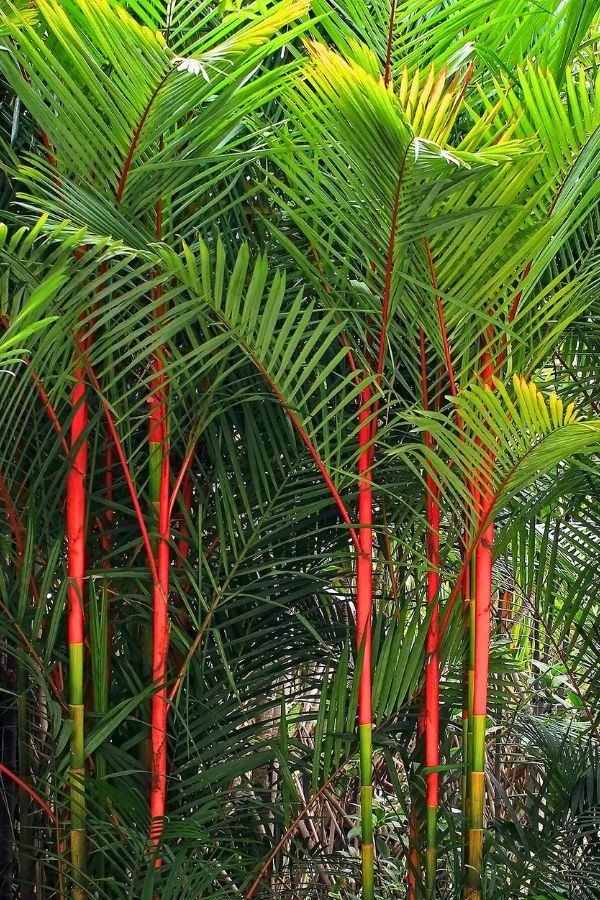
Lipstick Palm (Cyrtostachys renda)
Lipstick palms love the sun and require a lot of moisture. It’s not typically divided into different varieties, but its unique appearance makes it a standout in any tropical garden.
- Botanical name: Cyrtostachys renda
- Other common names: Red Sealing Wax Palm, Lipstick Palm
- Cold hardiness: USDA zones 10 to 11
- Cyrtostachys renda is not toxic to dogs or cats.
Red Shield Hibiscus
Hibiscus acetosella, also known as the Cranberry Hibiscus or African Rosemallow, is a tropical plant known for its deep burgundy, maple-like leaves and bright red flowers. The flowers are short-lived, usually opening in the morning and closing by afternoon.
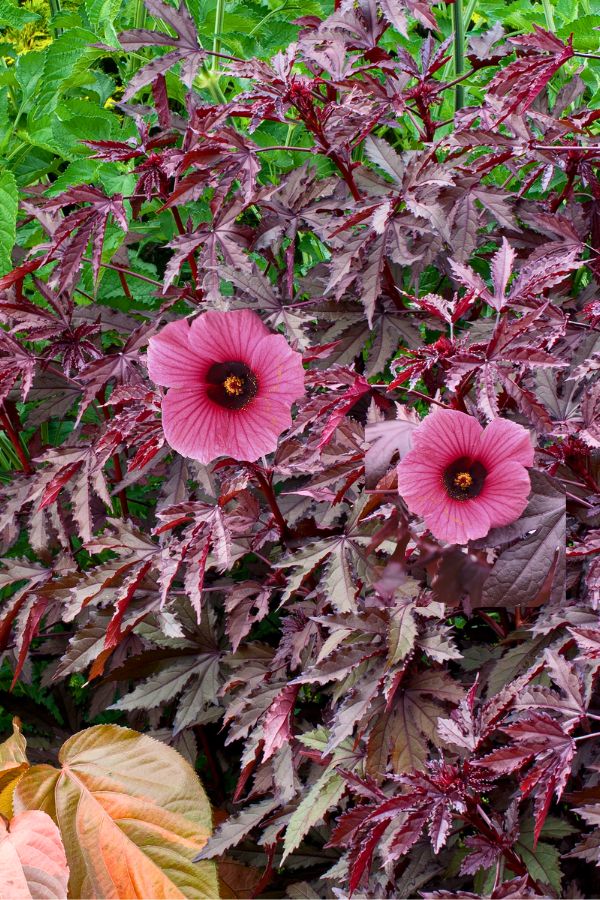
Red Shield Hibiscus
Hibiscus acetosella loves the sun and requires regular watering. It’s not typically divided into different varieties, but its unique appearance makes it a standout in any tropical garden.
- Botanical name: Hibiscus acetosella
- Other common names: Cranberry Hibiscus, African Rosemallow
- Cold hardiness: USDA zones 8 to 11
- Hibiscus acetosella is not toxic to dogs or cats.
Torch Ginger
Etlingera elatior, also known as the Torch Ginger, is a tropical plant known for its large, glossy leaves and striking flowers that resemble flaming torches. The flowers are typically red or pink and can reach up to two feet in height.
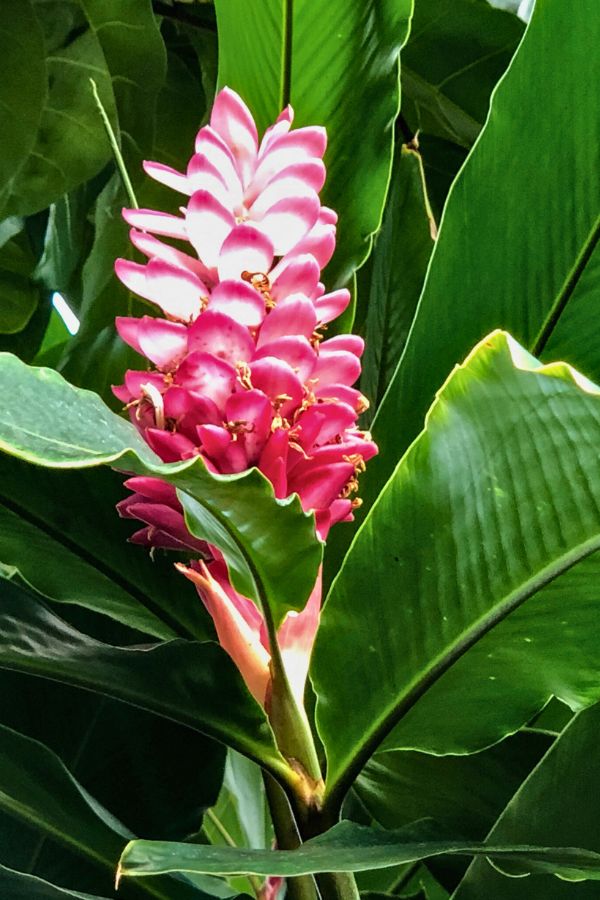
Torch Ginger
Torch ginger loves the sun and requires a lot of moisture. Its unique appearance makes it a standout in any tropical garden.
- Botanical name: Etlingera elatior
- Other common names: Red Ginger Lily
- Cold hardiness: USDA zones 10 to 12
- Toxicity: No, Etlingera elatior is not toxic to dogs or cats.
Giant Golden Pothos
The Giant Golden Pothos, with its heart-shaped leaves and cascading vines, is a sight to behold. Its foliage is a vibrant green, often variegated with yellow or white. The plant rarely flowers indoors, but when it does, the flowers are small and inconspicuous.
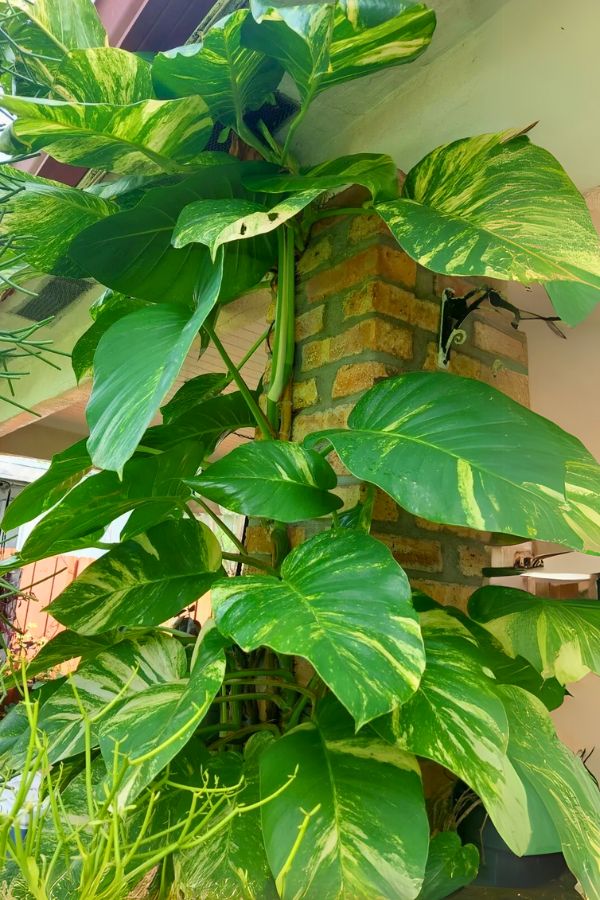
Giant Golden Pothos (Epipremnum aureum)
This plant is a shade lover, thriving in low to medium light conditions. Three popular varieties include the ‘Marble Queen’ with its white and green variegated leaves, the ‘Neon’ with its bright, solid green leaves, and the ‘Pearls and Jade’ with its white and green variegated leaves with a touch of silver.
- Botanical name: Epipremnum aureum
- Other common names: Devil’s Ivy, Silver Vine
- Cold hardiness: Not frost tolerant, best kept above 50°F (10°C)
King Tut Papyrus
The Papyrus ‘King Tut’ is a tall, elegant plant, known for its feathery clusters of thin, reed-like foliage. The plant produces small, brownish flowers that are arranged in an umbel.
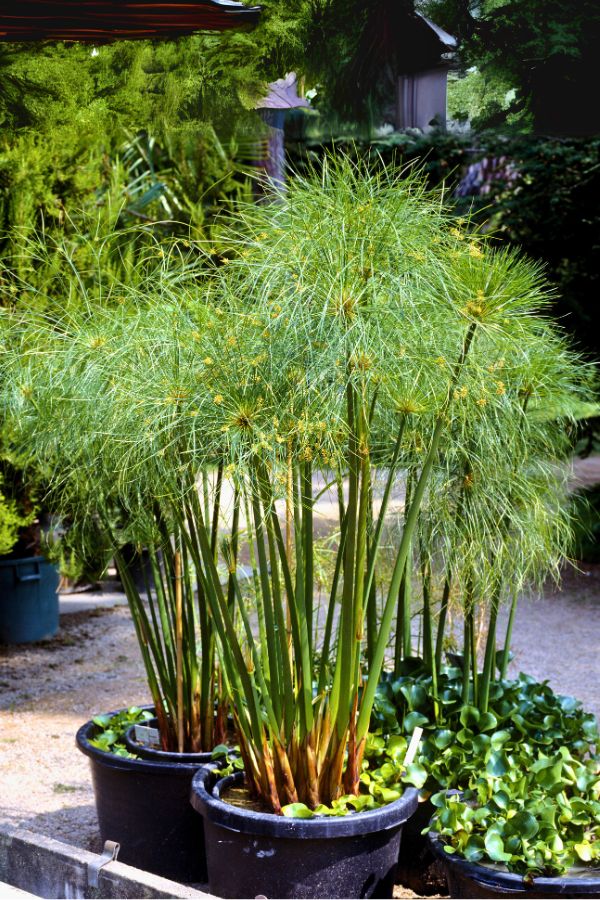
Papyrus “King Tut”
This plant loves the sun and is often found near water in its natural habitat. Three popular varieties include the ‘Gracilis’ with its slender, dark green stems, the ‘Nanus’ with its dwarf size and light green stems, and the ‘Percamentus’ with its variegated green and white stems.
- Botanical name: Cyperus papyrus
- Other common names: Egyptian Papyrus, Nile Grass
- Cold hardiness: Not frost tolerant, best kept above 50°F (10°C)
- Toxicity: Non-toxic to dogs and cats
Cordyline
Cordyline, also known as ti plants, are popular for their vibrant foliage and are relatively easy to care for. They thrive in bright, indirect light and prefer consistently moist, well-draining soil.
Varieties like C. fruticosa and C. australis offer diverse colors and sizes, making them suitable for both indoor and outdoor settings in warm climates.

Cordyline
Traveler’s Palm
The Traveler’s Palm is a striking, tree-like plant native to Madagascar, known for its large, fan-shaped arrangement of leaves. It’s not a true palm but is related to bananas and bird-of-paradise flowers.
- Botanical name: Ravenala madagascariensis
- Other common names: traveller’s tree, traveller’s palm or East-West palm
- Cold hardiness: USDA zones 10 to 11
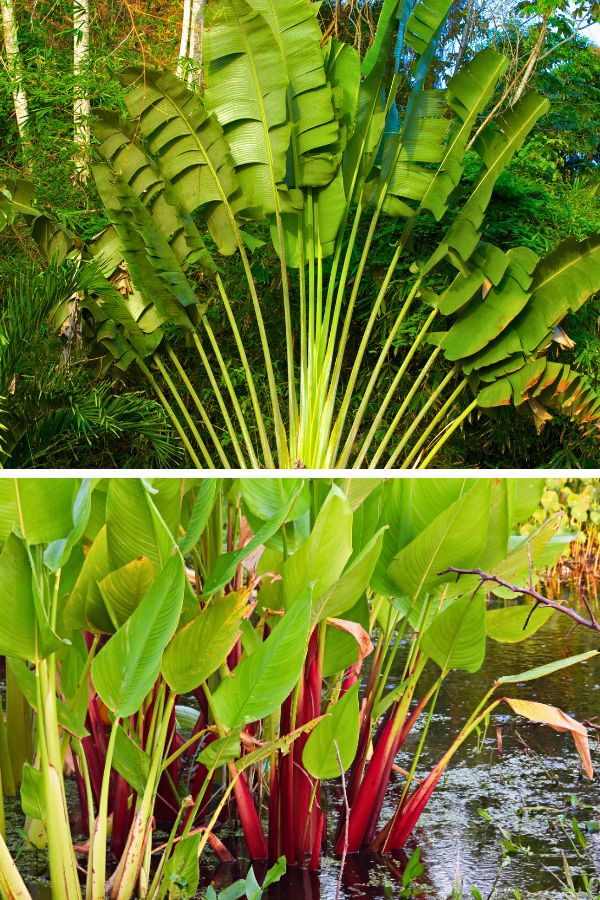
Traveler’s Palm (top), Thalia (bottom)
Red Stem Thalia
The red-stemmed Thalia, also known as alligator flag, is a striking tropical aquatic plant admired for its vibrant red stems and large, paddle-shaped leaves. This native of the southern United States is an excellent choice for water features, but can also be grown in well watered garden beds and large pots.
Thalia grows to a height of 5-8 feet with a spread of 2-5 feet. Other types of Thalia exist, one is Thalia dealbata. Known as hardy water canna or powdery thalia, this variety has striking blue flowers but without the red stems.
- Botanical name: Thalia geniculata ‘Ruminoides’
- Other common names: Water canna, Alligator flag
- Cold hardiness: USDA zones 8-10
How to use large tropical plants outdoors:
Large tropicals can be used in mass plantings, as a fast growing screen or in the front as a single accent plant.
They also create a focal accent in large pots outdoors, or indoors near a sunny window.
Save money by buying smaller plants early in the growing season, try growing them from seed. Also, some tropicals can be grown from small cuttings of the plant that can be purchased online.