
When you think of a garden, lush greens and bright flowers probably come to mind. But what if your landscape could stand out in an entirely different way? Enter black foliage plants—a dramatic and sophisticated twist on traditional garden design.
These plants bring depth, contrast, and a touch of mystery to any outdoor space, and they’re easier to grow than you might think.
In this article, we’ll explore some of the most stunning black foliage plants, how to use them in your garden design, and tips to keep them looking their best year-round.
What Are Black Foliage Plants?
Plants with “black” foliage aren’t truly black—but they come impressively close. These striking specimens are usually deep shades of purple, burgundy, or bronze that appear black under natural light. Their dark hues are due to high levels of pigments like anthocyanins, which also give blueberries and purple cabbage their color.
These moody beauties can act as focal points, create visual contrast, and lend a modern vibe to any garden.
Top Black Foliage Plants to Grow
Here are some garden-worthy options to consider:
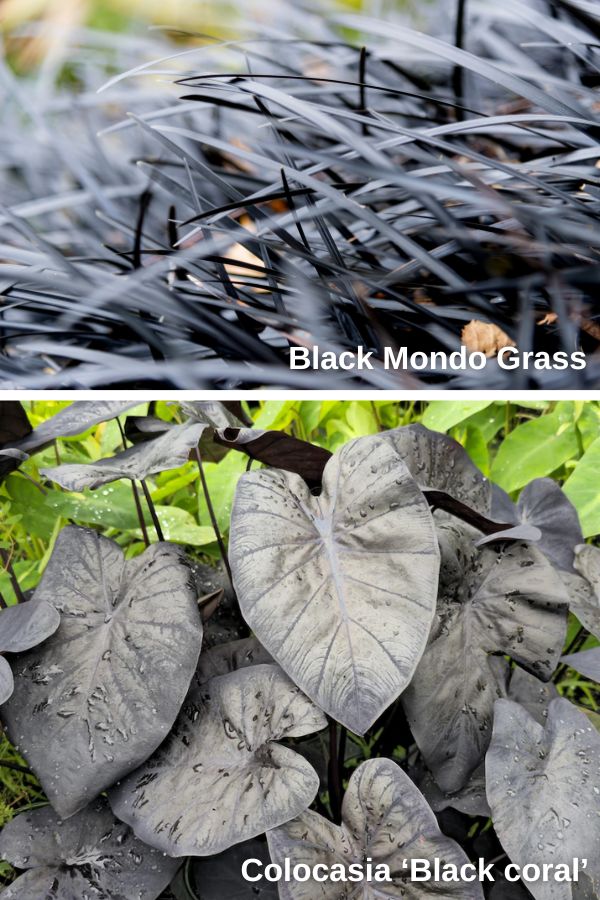
1. Black Mondo Grass (Ophiopogon planiscapus ‘Nigrescens’)
- Zone: 6–10
- Light: Full sun to part shade
- A low-growing, grass-like perennial with jet-black leaves. Ideal for borders, containers, or ground cover.
2. ‘Black Coral’ Elephant Ears (Colocasia esculenta)
- Zone: 8–11 (or grow as annual)
- Light: Full sun to part shade
- ‘Black Coral’ has huge, glossy all-black corrugated leaves and thrives in average to moist soil.
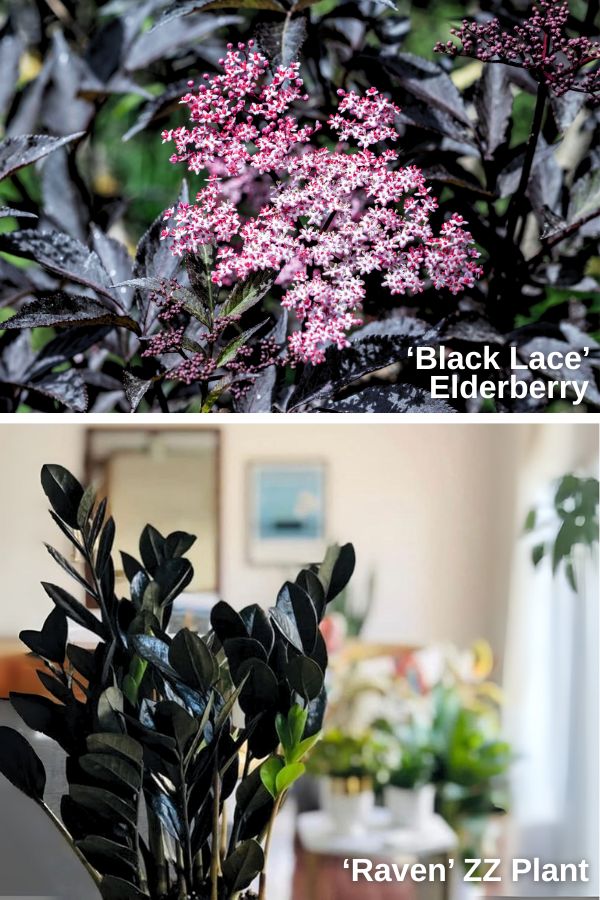
3. ‘Black Lace’ Elderberry (Sambucus nigra)
- Zone: 4–7
- Light: Full sun
- Deeply cut, lace-like foliage with pink blooms; great as a large shrub or hedge.
4. ‘Raven’ ZZ Plant (Zamioculcas zamiifolia)
- Zone: Indoors or tropical 10–12
- Light: Low to bright indirect light
- A houseplant with nearly black, glossy leaves. Low-maintenance and ideal for modern interiors.
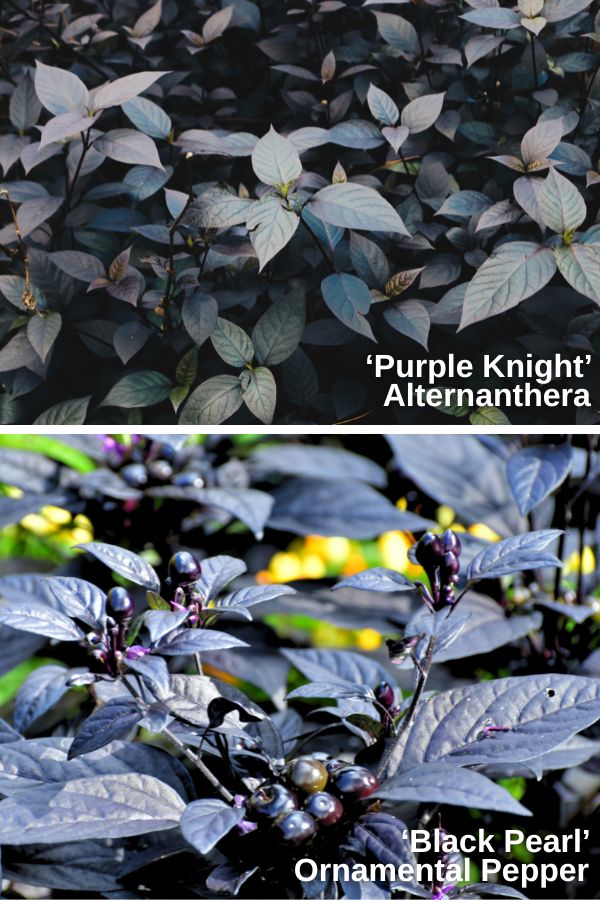
5. ‘Purple Knight’ Alternanthera
- Zone: 9–11 (grow as annual elsewhere)
- Light: Full sun for deepest color
- A fast-growing annual with bold, dark foliage that spreads into dense mounds.
6. ‘Black Pearl’ Ornamental Pepper (Capsicum annuum)
- Zone: Annual in most regions
- Light: Full sun
- Round, black peppers with dark leaves and small purple flowers—edible but very spicy!
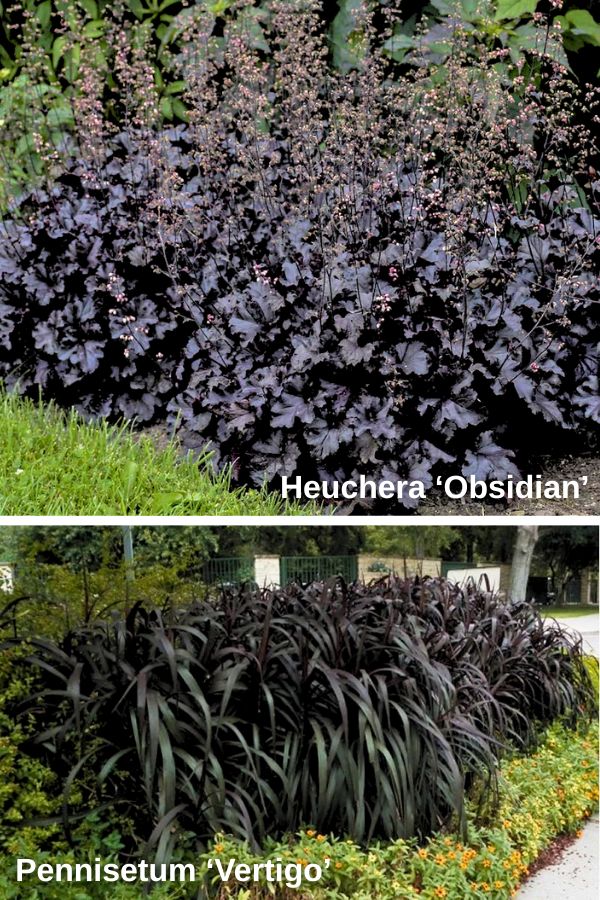
7. Heuchera ‘Obsidian’ (Coral Bells)
- Zone: 4–9
- Light: Part shade
- Compact mounds of nearly black foliage with a hint of sheen. Excellent for shaded beds.
8. Pennisetum ‘Vertigo’ (Fountain Grass)
- Zone: 9–11 (annual elsewhere)
- Light: Full sun
- A tall, dramatic grass with deep burgundy-black blades that sway gracefully in the breeze.
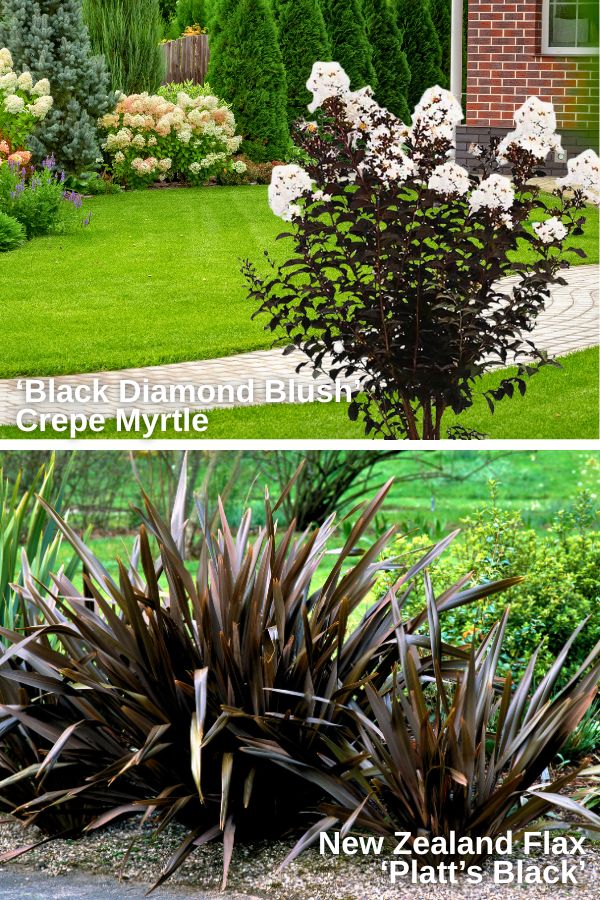
9. Black Diamond Blush Crepe Myrtle
- Zone: 6-10
- Light: Full sun
- The foliage is a distinctive black or deep purple-black with frilly pink flowers, maintaining its leaf color throughout the growing season.
10. (Nearly) Black New Zealand Flax
- Zone: 8-11
- Light: Full sun
- Phormium ‘Platt’s Black’ is a striking evergreen perennial known for its dark foliage and architectural presence.
How to Design with Black Foliage
Use Contrast to Your Advantage
Black foliage stands out when paired with lighter or brighter colors. Try mixing black mondo grass with silver lamb’s ear or planting ‘Black Lace’ elderberry near pale-pink roses.
Add Texture and Layering
Dark leaves look stunning against finely textured plants or glossy foliage. Use tall, airy grasses to balance bold-leaved taro or colocasia.
Embrace a Theme
Black foliage is ideal for:
- Modern gardens with clean lines
- Gothic or moody designs featuring dark blooms and stone accents
- Tropical vibes, especially when paired with bright oranges, reds, or chartreuse
Think Small (and Stylish)
These plants are fabulous in containers. Pair ‘Black Pearl’ ornamental peppers with trailing sweet potato vine, or add drama to your porch pots with Pennisetum ‘Vertigo.’
Best Color Companions for Black Plants
Color pairing makes black foliage really shine. Here are some great combinations:
- Chartreuse: Try with Creeping Jenny (Lysimachia nummularia ‘Aurea’)
- Silver: Combine with Dusty Miller or Artemisia
- White: Highlights black’s elegance—think white petunias or alyssum
- Brights: Deep foliage makes red, orange, and magenta flowers pop
Care and Maintenance Tips
While some black plants are fuss-free, others need a bit more attention:
- Sunlight: Most require full sun for the deepest coloration.
- Water: Taro and colocasia love moist soil, while mondo grass is drought-tolerant once established.
- Soil: Well-draining soil is key. Amend with compost when needed.
- Pruning: Trim back ornamental grasses in early spring. Cut flowers to shape shrubs like elderberry.
Year-Round Interest
Some black foliage plants shine year-round (like mondo grass and coral bells), while others are seasonal showstoppers. Use a mix of perennials and annuals to keep your beds interesting through all four seasons.
Sustainable Choices
Many of these plants are deer-resistant (hello, mondo grass and ornamental peppers), and some, like elderberry, offer value to pollinators and birds. Be sure to avoid invasive varieties and look for natives when possible.
Where to Buy Black Foliage Plants
Check your local nurseries, especially in spring and summer, or shop online from specialty retailers for rare varieties. Garden expos and plant swap Facebook groups are also great sources.
Final Thoughts
Black foliage plants are more than just a trend—they’re a timeless way to add contrast, structure, and a touch of drama to any garden or landscape. Whether you want a bold focal point or a moody accent, there’s a dark-leaved plant to suit your space.
Ready to go bold? Try planting one black foliage variety this season and see how it transforms your garden.