
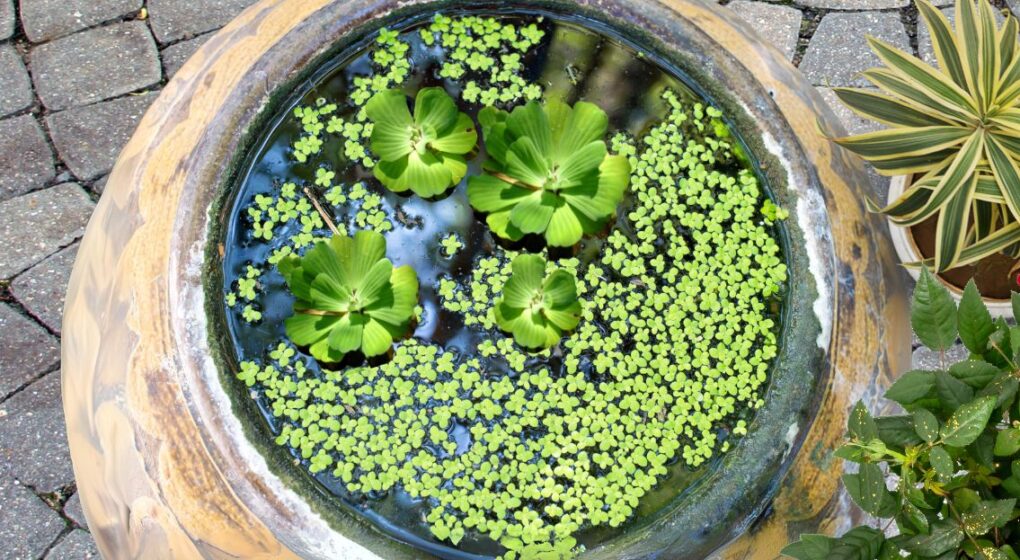
Floating plants are one of the easiest ways to improve the health, clarity, and beauty of a container water garden. Unlike rooted aquatic plants, true floating plants do not need soil or planters. They float freely on the surface, absorbing nutrients directly from the water while helping create a balanced, natural ecosystem.
If you’ve ever struggled with algae, cloudy water, or a container pond that looks incomplete, floating plants can make an immediate difference. Many begin improving water quality within days while adding lush visual appeal.
In this guide, you’ll discover 15 of the best true floating plants for container water gardens, including beginner-friendly favorites and unique varieties that add texture and color.
What Are True Floating Plants?
True floating plants are aquatic plants that float freely on the water’s surface without being rooted in soil. Their roots hang beneath them, absorbing nutrients directly from the water.
This makes them ideal for container water gardens because they:
- Require no planting
- Need no soil or containers
- Are easy to add or remove
- Help control algae naturally
- Require very little maintenance
This is different from water lilies and other floating-leaf plants, which must be planted in submerged soil.
Benefits of Floating Plants in Container Water Gardens
Floating plants do much more than just improve appearance. They play an important role in maintaining a healthy water garden ecosystem.
Natural algae control
Floating plants reduce algae growth by blocking sunlight from reaching the water. Since algae depend on sunlight, this helps keep water clear naturally.
Improved water clarity
They absorb excess nutrients like nitrogen and phosphorus, which would otherwise feed algae.
Cooler water temperatures
Floating plants provide shade that keeps water temperatures more stable, which is especially important in small container ponds.
Shelter for fish and aquatic life
Their roots provide hiding places that help fish feel secure and reduce stress.
Instant visual impact
Floating plants quickly transform a simple container into a lush, natural-looking water garden.
An Important Note
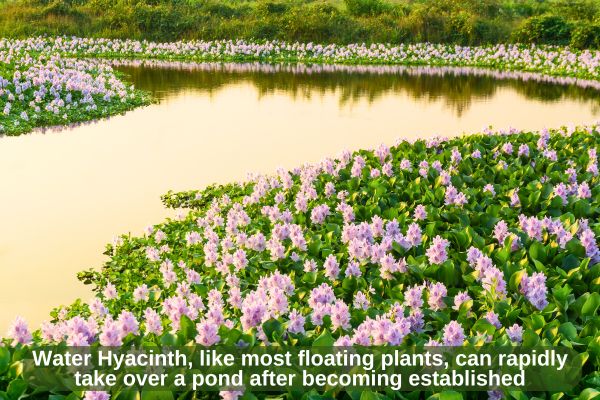
Many floating aquatic plants are considered invasive in warm climates, particularly in southern regions. Some species can spread rapidly if released into natural waterways.
Plants such as water hyacinth, parrot’s feather, and certain salvinia species may be restricted or illegal in some states.
I am only recommending here that you use them in container water gardens where they can remain contained and controlled easily. Floating plants can quickly spread and become a nuisance in a pond or larger aquatic environment. For that reason, I am not advising you to put them in your pond.
Always follow these responsible practices:
- Never release floating plants into natural waterways
- Never dispose of them in storm drains or creeks
- Always throw excess plants in the trash
- Keep plants fully contained in your water garden
- Check your local state regulations before purchasing
Responsible use ensures these plants remain safe and beneficial.
15 Best True Floating Plants for Container Water Gardens
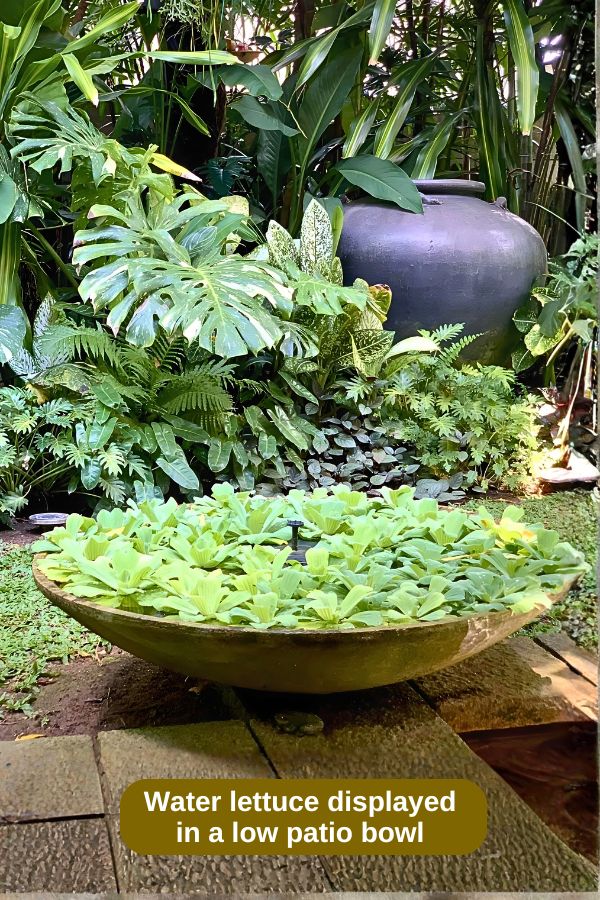
1. Water Lettuce (Pistia stratiotes)
Water lettuce is one of the most popular floating plants. It forms soft, velvety rosettes that resemble miniature heads of lettuce.
Its long roots are extremely effective at absorbing excess nutrients.
Why it’s excellent:
- Extremely easy to grow
- Excellent natural filtration
- Fast growing
- Beginner friendly
Growth rate: Fast
Sun: Full sun to partial shade
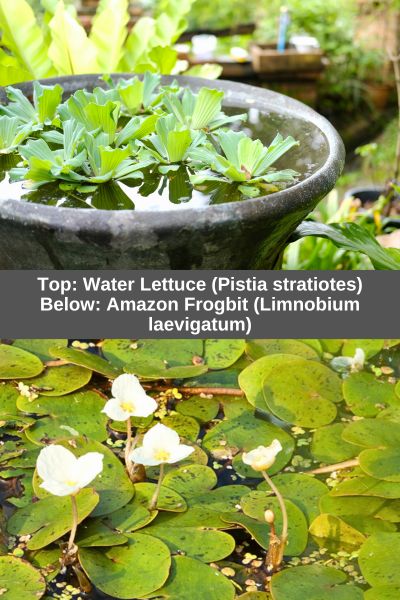
2. Amazon Frogbit (Limnobium laevigatum)
Amazon frogbit produces round leaves resembling tiny lily pads, with long trailing roots.
Why it’s excellent:
- Perfect for small container ponds
- Easy to manage
Tiger frogbit features striped foliage.
Growth rate: Moderate
Sun: Full sun to partial shade
3. American Frogbit (Limnobium spongia)
A native species well adapted to outdoor conditions.
Why it’s excellent:
- Native to North America
- Hardy and adaptable
- Excellent filtration
Growth rate: Moderate
Sun: Full sun to partial shade
4. Water Hyacinth (Eichhornia crassipes)
Known for its beautiful lavender flowers and powerful filtration ability.
Why it’s excellent:
- Produces attractive flowers (blue are most common but there is also a pink flowering variety)
- Extremely effective at improving water clarity
- Fast growing
Growth rate: Very fast
Sun: Full sun
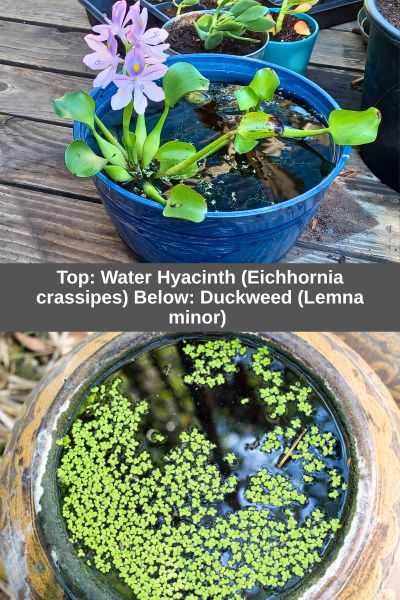
5. Duckweed (Lemna minor)
Duckweed forms a dense floating carpet of tiny leaves.
Why it’s excellent:
- Excellent algae suppression
- Extremely hardy
- Provides natural fish food
Growth rate: Very fast
Sun: Full sun to partial shade
6. Giant Duckweed (Spirodela polyrhiza)
Larger and easier to manage than common duckweed.
Why it’s excellent:
- Easier to control
- Strong nutrient absorption
- Attractive appearance
Growth rate: Fast
Sun: Full sun to partial shade
7. Salvinia minima
A floating fern with soft, textured leaves.
Why it’s excellent:
- Easy to grow
- Excellent algae control
- Attractive texture
Growth rate: Fast
Sun: Full sun to partial shade
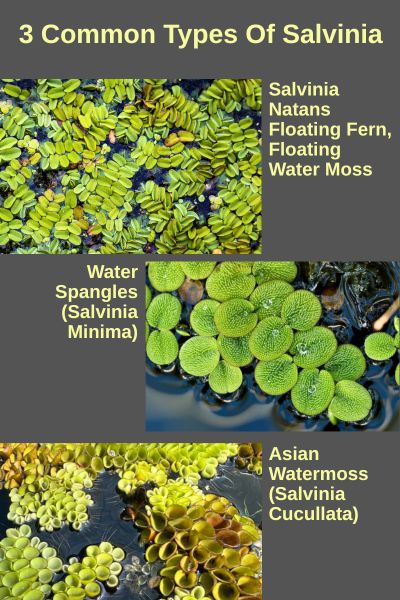
8. Salvinia natans
A slightly larger floating fern variety.
Why it’s excellent:
- Very adaptable
- Excellent surface coverage
- Easy care
Growth rate: Fast
Sun: Full sun to partial shade
9. Salvinia auriculata
A more decorative salvinia species.
Why it’s excellent:
- Unique appearance
- Excellent filtration
- Strong growth
Growth rate: Fast
Sun: Full sun to partial shade
10. Salvinia cucullata
A distinctive species with folded, textured leaves.
Why it’s excellent:
- Unique visual appeal
- Easy to grow
- Excellent coverage
Growth rate: Fast
Sun: Full sun to partial shade
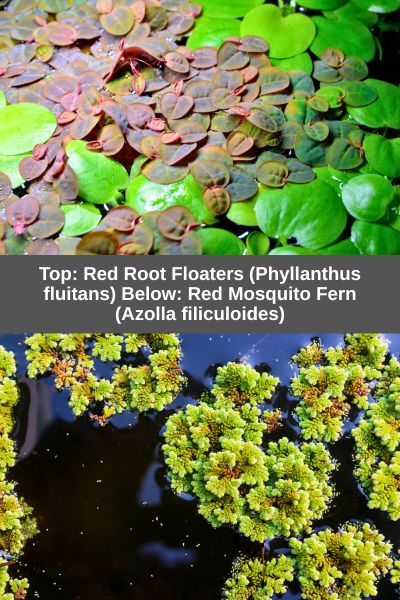
11. Red Root Floaters (Phyllanthus fluitans)
A highly ornamental floating plant with red roots and leaves in bright sunlight.
Why it’s excellent:
- Beautiful coloration
- Moderate, manageable growth
- Perfect for small containers
Growth rate: Moderate
Sun: Full sun
12. Carolina Mosquito Fern (Azolla caroliniana)
A tiny floating fern that often turns red in sunlight.
Why it’s excellent:
- Unique color change
- Excellent filtration
- Easy care
Growth rate: Fast
Sun: Full sun to partial shade
13. Red Mosquito Fern (Azolla filiculoides)
Similar to Carolina mosquito fern with deeper red coloration.
Why it’s excellent:
- Very decorative
- Excellent nutrient absorption
- Easy to grow
Growth rate: Fast
Sun: Full sun to partial shade
14. Bladderwort (Utricularia vulgaris)
A carnivorous floating plant that feeds on microscopic organisms.
Why it’s excellent:
- Fascinating and unique
- Helps balance water ecosystems
- Produces small yellow flowers
Growth rate: Moderate
Sun: Full sun to partial shade
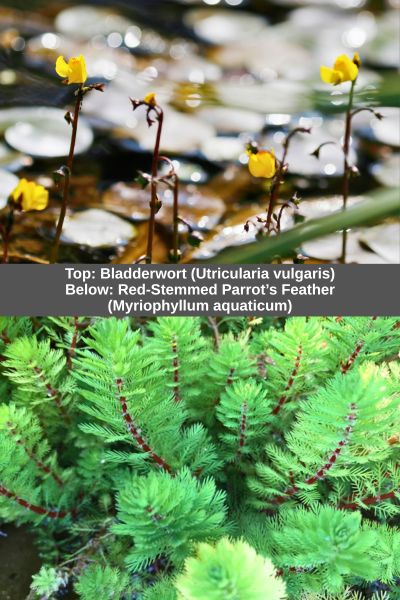
15. Red-Stemmed Parrot’s Feather (Myriophyllum aquaticum)
Parrot’s feather has feathery green foliage growing along reddish stems. While often planted in soil, it grows very well as a free-floating plant in container water gardens.
Why it’s excellent:
- Can grow rooted or floating
- Excellent natural filter
- Features small yellow flowers held 2-4 inches above the water
- Fast growing
Growth rate: Fast
Sun: Full sun to partial shade
How Many Floating Plants Should You Add?
For best results, cover approximately 30% to 60% of the water surface.
This provides enough shade to control algae while still allowing proper oxygen exchange.
Avoid covering the entire surface.
How to Care for Floating Plants
Floating plants are extremely easy to maintain.
Sunlight
Most prefer 4 to 8 hours of sunlight daily.
Fertilizer
Usually not necessary. Floating plants absorb nutrients directly from the water.
Thinning
Remove excess growth regularly and dispose of it responsibly in the trash.
Winter care
Most floating plants will not survive freezing temperatures and must be replaced each year or brought indoors.
Best Floating Plants for Beginners
These are especially easy to grow:
- Water lettuce
- Amazon Frogbit
- Salvinia minima
- Giant duckweed
These plants are reliable, forgiving, and perfect for beginners.
Where To Find Floating Pond Plants
I use three main sources to find floating plants for my container ponds.
- Parks and public waterways. Be sure you have permission to remove a couple of their plants before you take them home. Since most floaters are considered invasive or nuisance species, they often do not mind if you take two or three. I have found duckweed, water hyacinth, and water lettuce in swampy areas/lakes near my house. Take a large plastic bag or container you can fill with water or damp paper towels you can wrap the roots to keep them moist during transport. Two or three plants is all you need. They will quickly adapt to their new home and begin to multiply.
- Garden centers and aquarium stores sell certain varieties of floating plants. You can check online or give them a call.
- Also (this one is my favorite), almost any type of floating plant can be sourced on Ecommerce platforms like Ebay, Etsy, and Amazon. You might be asking how they survive shipping. Online sellers do their best to ship the roots in moist paper towels that are wrapped in plastic and tied off below the foliage. This way, the roots are sealed and kept moist. Most of the floating plants I have purchased in the past survived shipping. Look for a seller near you if possible that offers free returns or replacements.
Final Thoughts
Floating plants are one of the easiest ways to begin with container water gardens. They help control algae, improve water clarity, and create a balanced ecosystem with very little effort.
Start with beginner-friendly plants like Frogbit or water lettuce, and expand your collection as you gain experience.