
Bring peace and tradition to your outdoor space with these small traditional Japanese water features perfect for patios, courtyards, and small gardens—featuring bamboo fountains, medaka ponds, and tsukubai stone basins.
Why Japanese Water Features Are So Appealing in Small Gardens
Japanese water features are known for their ability to bring tranquility and timeless beauty into any space—especially small gardens, patios, or courtyards. Rooted in Zen philosophy and the appreciation of nature’s quiet power, traditional Japanese fountains and ponds celebrate subtle movement, sound, and texture. These features are designed to evoke balance, serenity, and a sense of purpose, often using natural materials like bamboo, stone, and water itself to create harmony.
Natural Materials in Traditional Japanese Water Features
A defining trait of Japanese garden design is the use of organic, weathered materials that blend into their surroundings. These are the most common:
- Stone – used in carved basins, millstones, and garden lanterns
- Bamboo – for spouts, piping, and decorative framing
- Ceramic or Clay – used for container water gardens and medaka fish ponds
- Wood – for supports, trim, and rustic character
- Water – viewed as a design element, not just a utility
1. Bamboo Fountains (Shishi-Odoshi & Kakei)
Among the most iconic Japanese water features is the shishi-odoshi, also known as a deer-scarer. This traditional fountain uses a pivoting bamboo tube that fills with water and tips to make a soft knocking sound before resetting. Originally designed to frighten animals from gardens, it now adds a meditative rhythm to modern outdoor spaces.
A simpler form, the kakei, features a steady bamboo spout that pours into a stone basin. Both styles bring a calming sound and visual movement to compact patios and garden nooks.
2. Container Water Gardens with Medaka Fish or Fancy Goldfish
Small ceramic or clay pots are often used to house rice fish (medaka) or fancy goldfish in Japanese homes and balconies. These hardy, ornamental fish are ideal for small container water gardens because they thrive in shallow water and tolerate a range of temperatures.
These mini ponds can be placed on a patio table or nestled into a planting bed. Add floating plants like water lilies or lotus, plus a few oxygenating plants to maintain water quality. The result is a living, breathing piece of nature perfect for tight spaces.
3. Tsukubai (Stone Water Basins Used in Tea Gardens)
Tsukubai are traditional stone basins originally placed at the entrance of tea gardens for ritual cleansing. Visitors would stoop to rinse their hands and mouths before entering the tea house—a gesture of humility and mindfulness.
Modern gardeners use tsukubai to create a focal point in shaded corners or near walkways. A small bamboo spout gently fills the basin, often surrounded by moss, stepping stones, and ferns. The low profile and textural charm make this water feature ideal for compact gardens.
4. Zenigata (Millstone Coin-Shaped Water Basins)
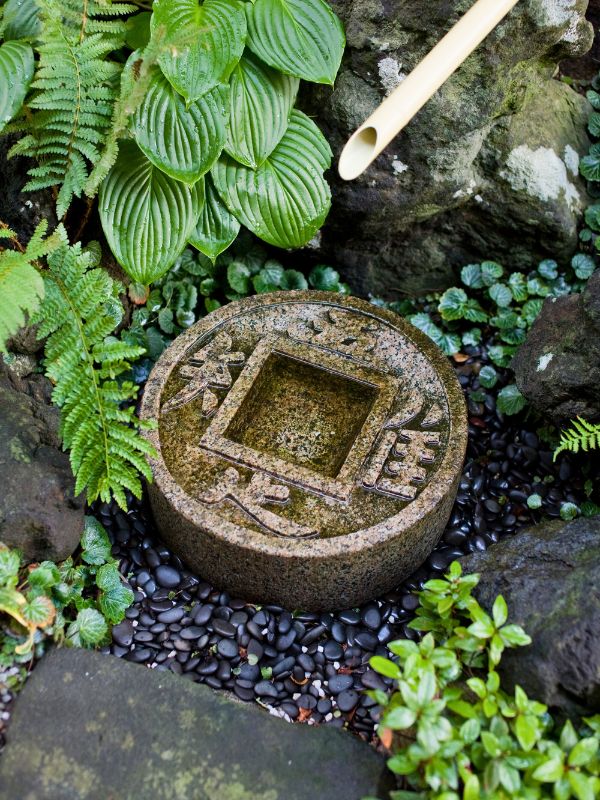
Zenigata basins are created from old stone millstones, their round shape and carved ridges reminiscent of ancient Japanese coins. They are typically shallow and placed at ground level or atop a flat stone pedestal.

Zenigata millstone fountain
The symbolism of the coin evokes prosperity and timeworn beauty. These basins can be used as static water features or fitted with a small recirculating pump for a soft trickle effect.
5. Kiku Basins (Chrysanthemum-Shaped Water Basins)
The kiku basin is a beautifully carved stone vessel featuring stylized chrysanthemum petals radiating outward. Kiku means chrysanthemum in Japanese—a flower that symbolizes longevity, rejuvenation, and the imperial family.
Historically used in temple courtyards and noble estates, these basins were admired both for their beauty and for their association with purity and seasonal awareness. Their shallow design makes them ideal as ornamental water features in small garden spaces.
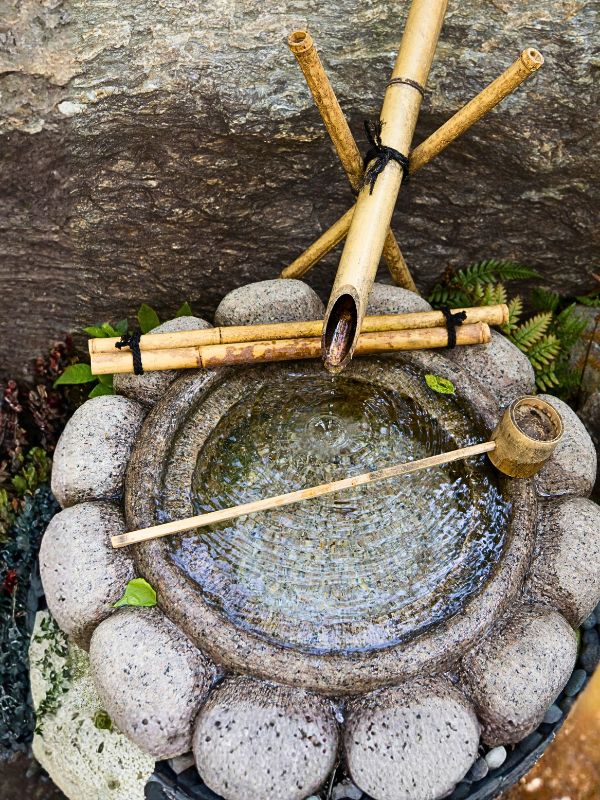
Kiku basin
Use a kiku basin as a reflective water element, or allow rainwater to collect naturally for a wabi-sabi effect. Pair it with stepping stones, moss, or a nearby bamboo spout for an authentic presentation.
6. Rain Chains with Water Catchment Basins
Instead of a standard downspout, many Japanese homes use a kusari-doi, or rain chain, which channels rainwater down through a series of cups or links. Place a ceramic or stone bowl at the base to collect the runoff.
This is a beautiful way to add movement and natural sound to your space, especially during rainfall. Rain chains also double as sculptural elements between rooflines and the ground.
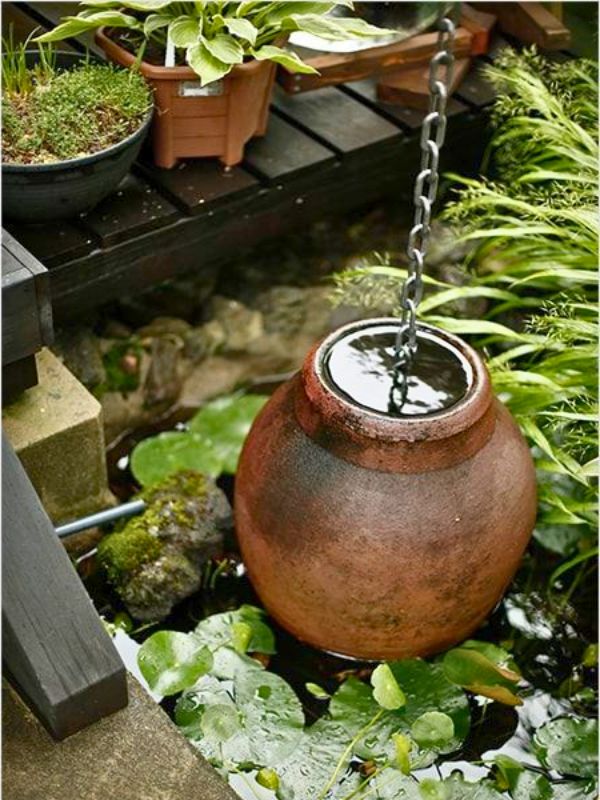
Rain chain and catchment water basin
7. Suikinkutsu (Water Harp Cave)
One of the most poetic and lesser-known features, a suikinkutsu is a hidden sound installation. A pot is buried upside-down beneath a tsukubai or bamboo spout. As water drips into the void, it creates a soft, bell-like echo.
These can be difficult to install but are an unforgettable feature in sensory gardens, adding a secret, ambient sound layer to the space.
8. Small Water Bowls in Dry Gardens
Even in karesansui (dry gardens), small water bowls are sometimes used near entrances or stone arrangements to create contrast. A still water bowl can serve birds, reflect sky and trees, or simply offer symbolic cleansing.
Use a shallow ceramic bowl, pair it with raked gravel and a stone lantern for a balanced miniature vignette.
How to Add a Traditional Japanese Water Feature Without Changing Your Entire Landscape
The beauty of small traditional Japanese water features is that you can incorporate them without a full garden renovation:
- Add a container medaka pond to a balcony or patio table
- Nestle a stone basin near your front walkway or under a Japanese maple
- Install a bamboo spout fountain into an existing flower bed
- Hang a rain chain from your roofline with a decorative catch basin
- Set a lotus bowl on a pedestal as a sculptural element
With their timeless aesthetic and compact footprint, these water features offer a serene focal point and a connection to nature—no matter how big or small your outdoor space may be.